

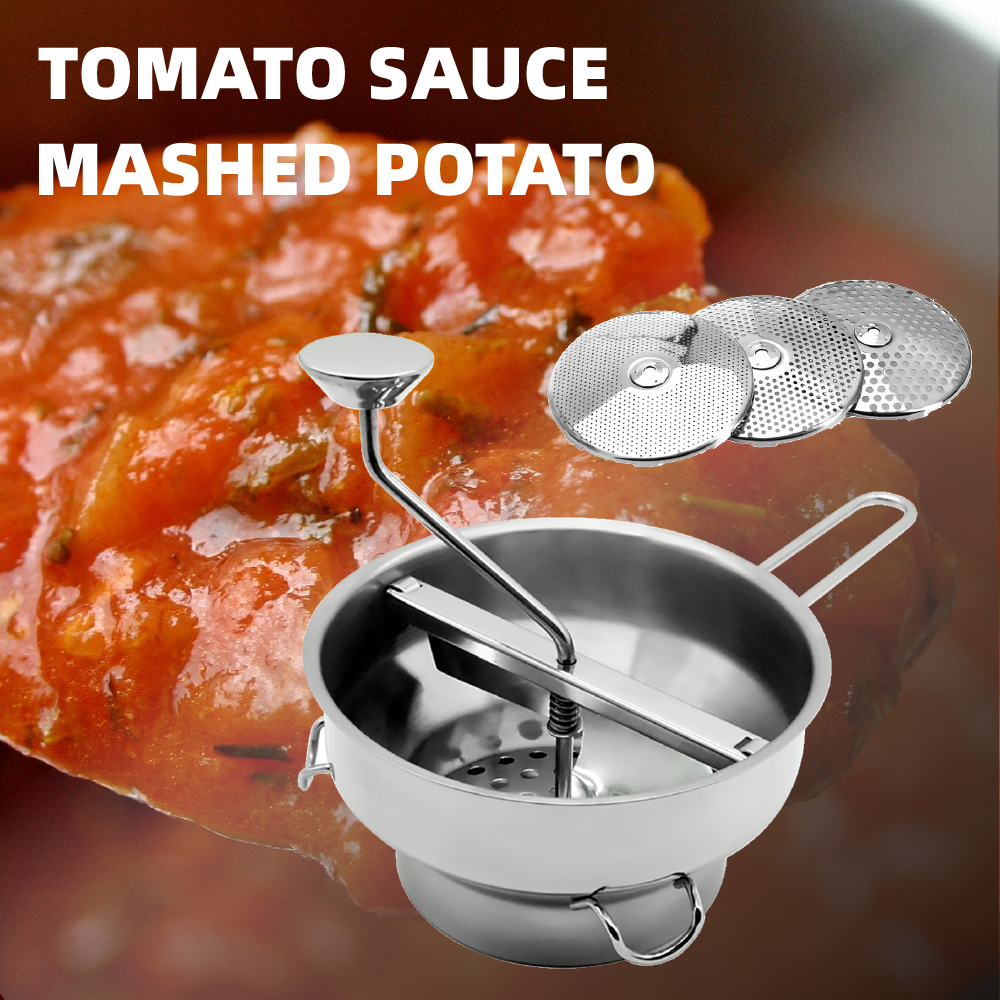
1. Uncompromising Hygiene and Food Safety
The most critical advantage of a stainless steel food mill is its contribution to food safety. Stainless steel, particularly food-grade 304 (18/8 or 18/10) stainless steel, is celebrated for its non-porous and smooth surface . This means it will not harbor bacteria, mold, or other pathogens that can thrive in the microscopic scratches and crevices found in other materials .
Unlike aluminum, which can react with acidic foods like tomatoes or citrus, or plastic, which can stain and absorb odors, stainless steel is chemically inert . It will not leach any unwanted flavors, colors, or metallic compounds into your carefully prepared foods, ensuring that the taste of your heirloom tomato sauce is pure and unadulterated. This inert quality also makes it compliant with strict food safety regulations set by agencies like the FDA.
2. Superior Corrosion and Rust Resistance
A food mill is constantly exposed to moisture, food acids, and rigorous washing. This environment is a recipe for rust and corrosion in lesser metals. Standard steel or cast iron will quickly succumb to rust, compromising the tool's integrity and contaminating food. Aluminum, while lightweight, can pit and corrode when exposed to salt or acids.
Stainless steel's secret weapon is chromium. When exposed to oxygen, the chromium in the steel forms a thin, invisible, protective layer of chromium oxide on the surface . This passive layer is self-repairing and provides exceptional resistance to rust, pitting, and corrosion . This means your stainless steel food mill can handle endless batches of acidic berries or salty broths without degrading, maintaining its appearance and safety for decades.
3. Exceptional Durability and Longevity
A food mill is a mechanical tool that must withstand significant torque and pressure as you crank through firm apples or fibrous greens. Stainless steel offers high tensile strength and durability, ensuring the mill's body, hopper, and blades do not warp, crack, or break under stress. Stainless steel food equipment is known for withstanding constant mechanical stress and aggressive cleaning routines . While a plastic food mill might crack under pressure or from exposure to hot foods, and an aluminum one might dent, a well-made stainless steel mill is built to be a lifetime purchase. Its robustness ensures consistent performance and reliable results for generations.
4. Ease of Cleaning and Maintenance
The smooth, non-porous surface that makes stainless steel hygienic also makes it incredibly easy to clean . Food particles do not cling to it as stubbornly as they do to other materials. After use, a stainless steel food mill can typically be rinsed clean or quickly scrubbed without the need for harsh abrasives that could damage the surface . It is also heat-resistant and can often withstand the high temperatures of a dishwasher, making sanitation effortless . This ease of cleaning not only saves time but also reinforces the hygiene benefits by ensuring a thorough clean every time.
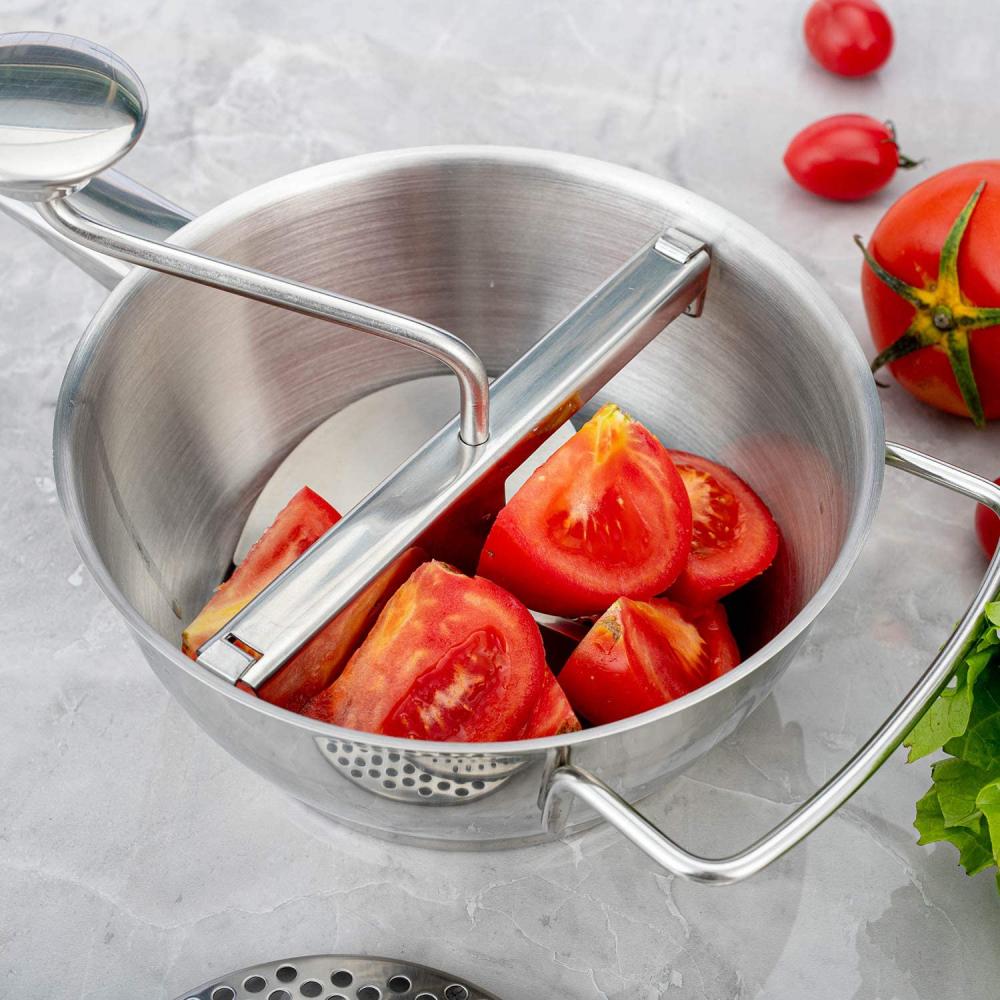
5. A Comparison with Other Materials
To fully appreciate stainless steel, it helps to see how it stacks up against the alternatives:
| Feature | Stainless Steel (e.g., 304 Grade) | Aluminum | Plastic |
|---|---|---|---|
| Reactivity | Non-reactive; safe with all foods | Can react with acidic foods | Non-reactive, but can stain/absorb odors |
| Durability | High strength, resists dents and cracks | Softer, prone to denting and warping | Can crack under high heat or pressure |
| Corrosion Resistance | Excellent; chromium oxide layer prevents rust | Can corrode and pit, especially with salt/acid | Does not rust, but can degrade in heat/dishwasher |
| Cleanability | Smooth, non-porous, easy to sanitize | Porous surface can be harder to deep clean | Porous; scratches can harbor bacteria |
| Longevity | Very high; a lifetime investment | Moderate; susceptible to wear | Low to Moderate; prone to breakage |
In conclusion, the advantages of a stainless steel food mill are clear: it offers unparalleled hygiene, ensures the pure taste of your food, provides rock-solid durability, and is simple to maintain. While the initial investment may be slightly higher than other materials, its long-term performance and reliability make it the most economical and safest choice for anyone serious about cooking.