

1. Unmatched Thermal Conductivity for Perfect Texture
The primary job of a frothing pitcher is to act as a vessel where steam transforms cold milk into a silky, aerated liquid. Stainless steel excels at this because of its excellent thermal properties. It is a great conductor of heat, meaning it quickly and evenly transfers the heat from the steam wand to the milk .
This efficiency is crucial for two reasons. First, it allows the milk to heat up rapidly, minimizing the time the milk spends in the "danger zone" where it could scald or burn. Second, and perhaps more importantly, it allows the barista to feel the temperature change through the walls of the pitcher . As stainless steel heats up, it provides immediate tactile feedback. Experienced baristas rely on this sensation—knowing exactly when the pitcher becomes too hot to hold comfortably at the base—to gauge when the milk has reached the ideal serving temperature of 135-155°F (55-65°C) . This level of intuitive control is impossible with insulated materials like ceramic or double-walled glass.
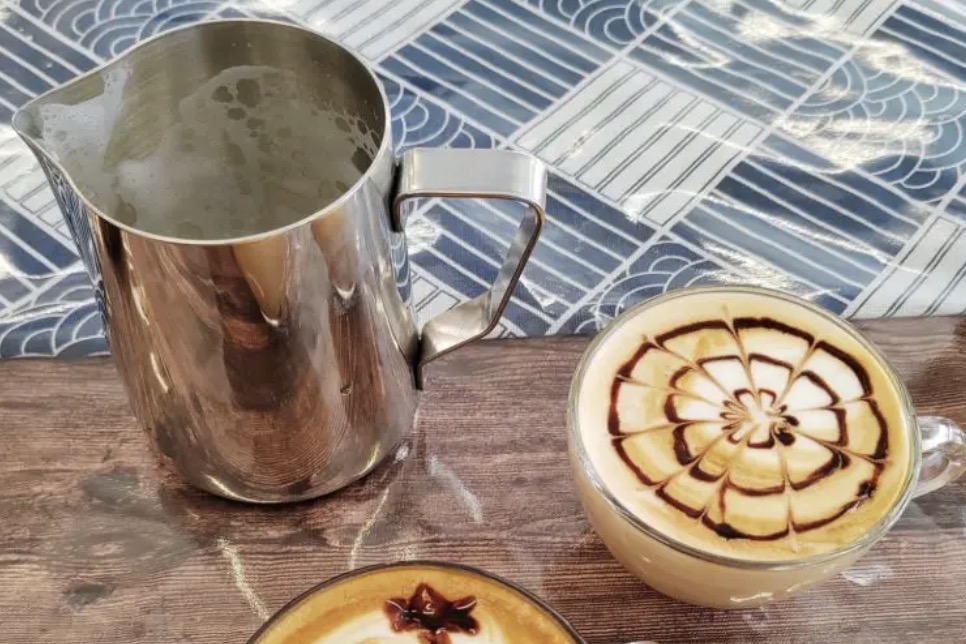
2. Superior Durability and Hygiene
A milk frothing pitcher is subjected to daily wear and tear. It is repeatedly heated, cooled, banged against countertops, and scrubbed clean. Food-grade 304 (18/8 or 18/10) stainless steel is incredibly robust . Unlike glass, it will not shatter if dropped. Unlike ceramic, it will not chip. Unlike plastic, it will not stain or absorb odors over time .
This durability directly contributes to hygiene. Stainless steel has a non-porous surface, which means it does not harbor bacteria, old milk residue, or lingering smells . A quick rinse and wipe are often enough to clean it thoroughly, ensuring that each new pitcher of milk is fresh and uncontaminated by the previous one. This non-reactive nature also means it won't impart any metallic taste to your milk, preserving the pure flavor of your coffee .
3. Lightweight Yet Balanced Maneuverability
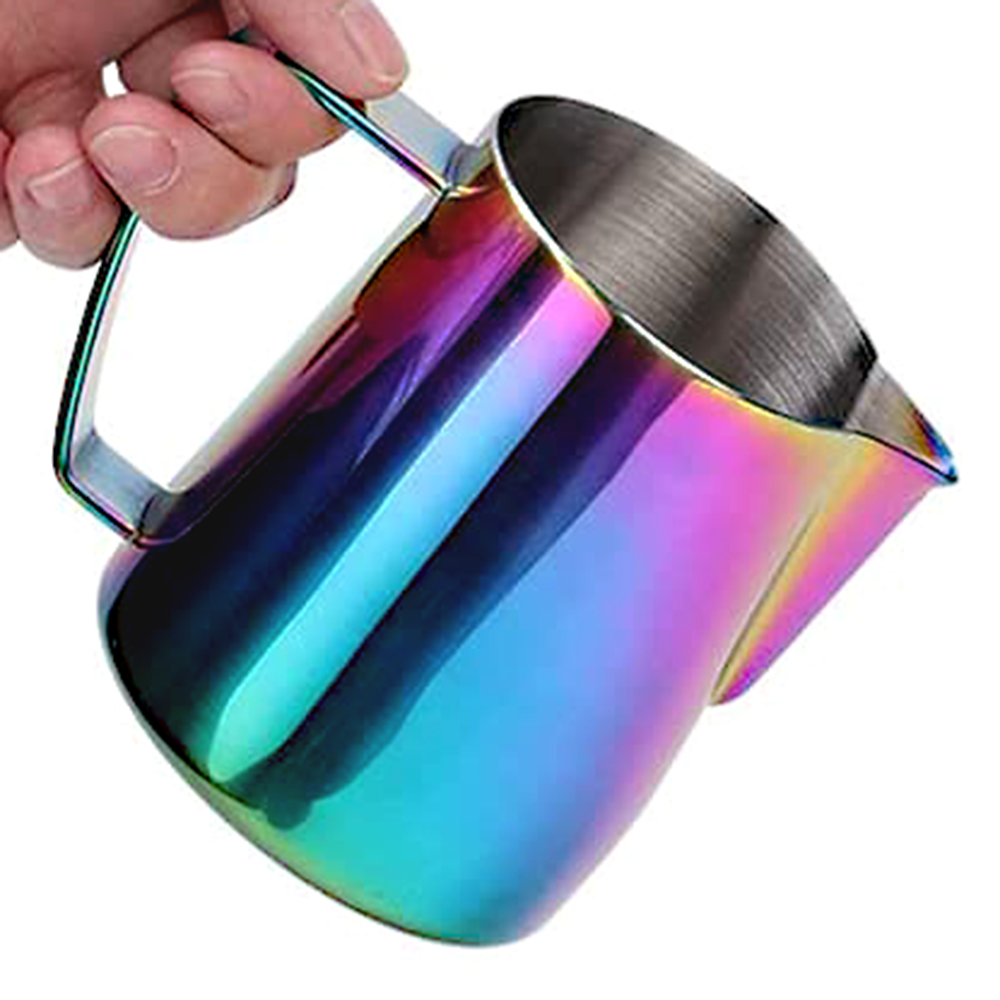
While materials like ceramic can be heavy and clumsy, high-quality stainless steel strikes the perfect balance between weight and strength. It is light enough to hold comfortably with one hand for the duration of the steaming and pouring process, yet it has enough heft to feel stable and balanced .
This balance is essential for controlling the vortex during stretching and for executing precise pours during latte art. A pitcher that is too heavy will fatigue your wrist, while one that is too light (like some thin plastics) can feel flimsy and difficult to control. The specific gauge of the steel contributes to this feel; professional-grade pitchers often use a 1.0mm thick steel that provides the perfect amount of weight and stability, helping you pour with confidence .
4. Ergonomic and Aesthetic Versatility
Stainless steel is a highly malleable material, allowing manufacturers to shape it into ergonomic designs that enhance the user's grip. Whether it features a traditional welded handle or a modern, minimalist grip with silicone panels (like the Fellow Eddy), the underlying steel provides a strong foundation for these ergonomic features .
Furthermore, its surface is a canvas for both function and style. It can be given a mirror polish for a classic, professional look, or a matte, coated finish for a modern aesthetic and a better grip . Some pitchers even feature internal measurement markings etched into the steel, allowing for precise, repeatable milk portions without the risk of the markings wearing off, as they might with printed labels .
In conclusion, choosing a stainless steel milk frothing pitcher is a choice for control, durability, and consistency. Its thermal conductivity gives you a sensory connection to the milk, its strength ensures it will last for years, and its balanced design makes the art of coffee preparation a more enjoyable and successful experience.