

1. Prioritize Material Quality: Why Stainless Steel?
The material of your pitcher is the foundation of its performance. High-quality stainless steel, specifically food-grade 304 (18/8 or 18/10) stainless steel, is the industry standard for a reason . This material offers excellent durability, is highly resistant to rust and corrosion from frequent use and washing, and provides the ideal thermal properties for milk steaming .
Unlike glass or plastic, stainless steel is a great conductor of heat. This allows the pitcher to heat up quickly and, more importantly, enables you to feel the temperature of the milk through the pitcher's wall . This tactile feedback is crucial for experienced baristas who rely on touch rather than a thermometer to know when the milk has reached the perfect temperature (typically 135-155°F or 55-65°C) without scalding .
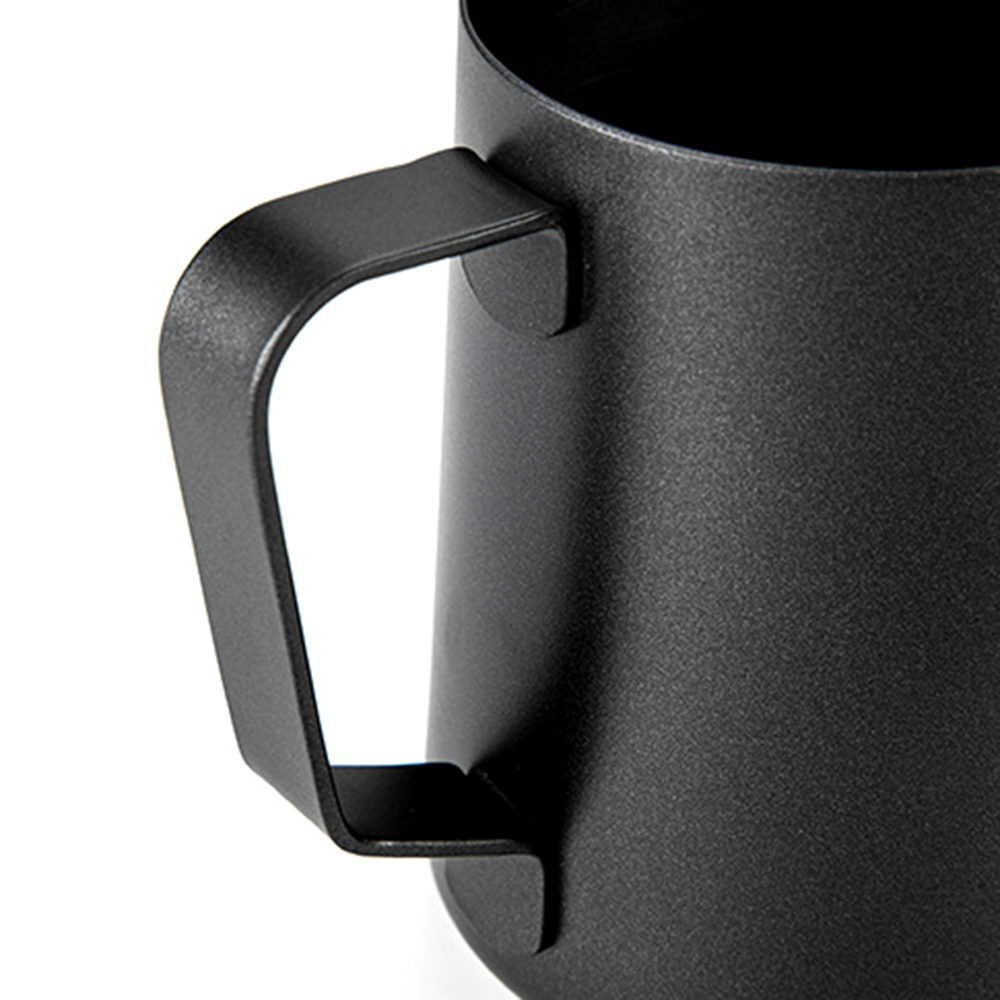
Some milk jugs also feature a non-stick coating on the interior. While this can make cleaning easier, especially when working with plant-based milks that tend to stick, these coatings can wear off over time . For longevity and the purest control, a high-quality uncoated stainless steel pitcher is often the best choice .
2. Choose the Right Capacity
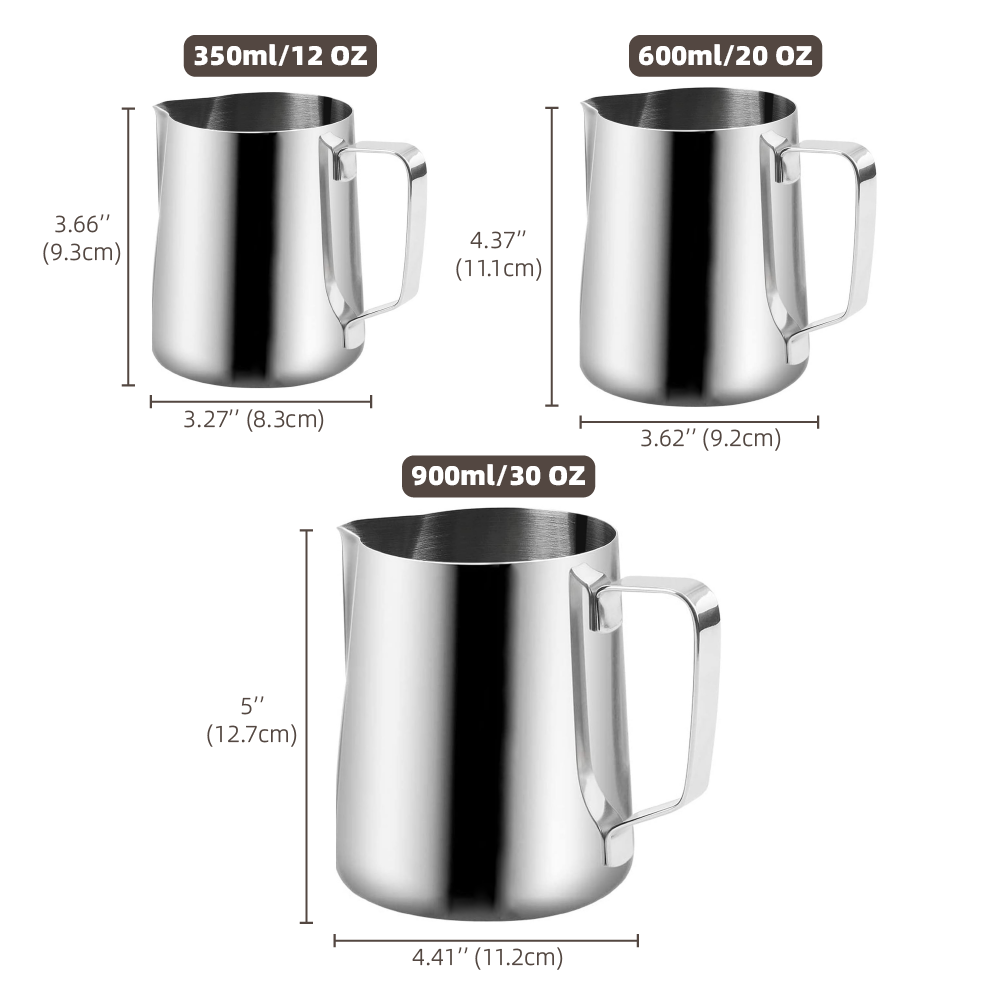
Pitcher size is directly linked to the volume of drinks you typically make. The most common sizes are 12 oz (350 ml) and 20 oz (600 ml) . As a golden rule, you should only fill the pitcher halfway to allow the milk to expand and double in volume during the frothing process .
-
12 oz (350 ml) Pitchers: These are ideal for making a single milk-based drink, such as a latte, cappuccino, or cortado. They offer greater control for practicing detailed latte art due to their smaller size and maneuverability .
-
20 oz (600 ml) Pitchers: This is the most versatile size for home use and a staple in cafes. It can comfortably froth enough milk for one large latte or two smaller drinks simultaneously .
-
32 oz (1000 ml) and Larger: These are designed for high-volume commercial settings where baristas need to froth milk for multiple drinks in one batch to keep up with demand .
For beginners, a 600ml pitcher is often recommended because the larger space offers a higher tolerance for error, making it easier to master the frothing technique .
3. Understand Spout Design: Precision vs. Ease
The spout is the most critical feature for pouring milk, especially if you are interested in latte art .
-
Sharp or Narrow Spouts: These spouts are designed for precision and control. They allow you to pour a thin, concentrated stream of milk, which is essential for creating intricate designs like rosettas, tulips, and swans . Pitchers like the Barista Gear Pro are favored by experts for this level of detail .
-
Rounded or Bell-Shaped Spouts: These are more forgiving and easier for beginners to control. They create a wider, gentler flow of milk, making it simpler to pour basic patterns like hearts or a simple monk's head. The Fellow Eddy pitcher is a good example of a rounded spout design that helps beginners master the fundamentals .
4. Don't Overlook Handle and Build
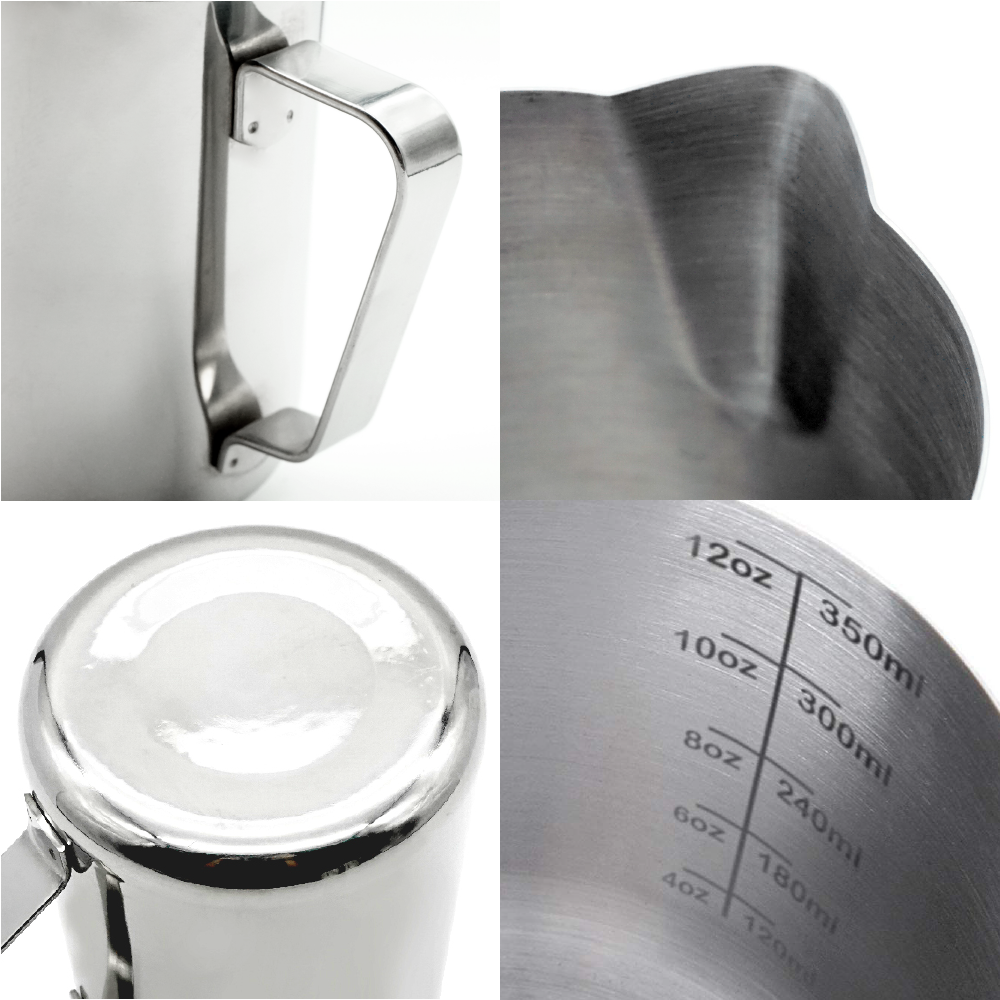
An ergonomic handle provides comfort and stability, which is essential for a steady pour. Look for handles that are securely welded to the pitcher and fit comfortably in your hand . Some modern designs even replace a traditional handle with a silicone grip pad for more direct control .
The thickness of the steel also matters. A thicker gauge (e.g., 1.0mm) provides better balance, feels more stable in the hand, and offers superior heat retention, making it a professional-grade choice . Lighter pitchers (around 0.5mm) are more budget-friendly and easier to handle for casual use .
5. Consider Handy Features
Modern pitchers often come with additional features that can enhance your workflow:
-
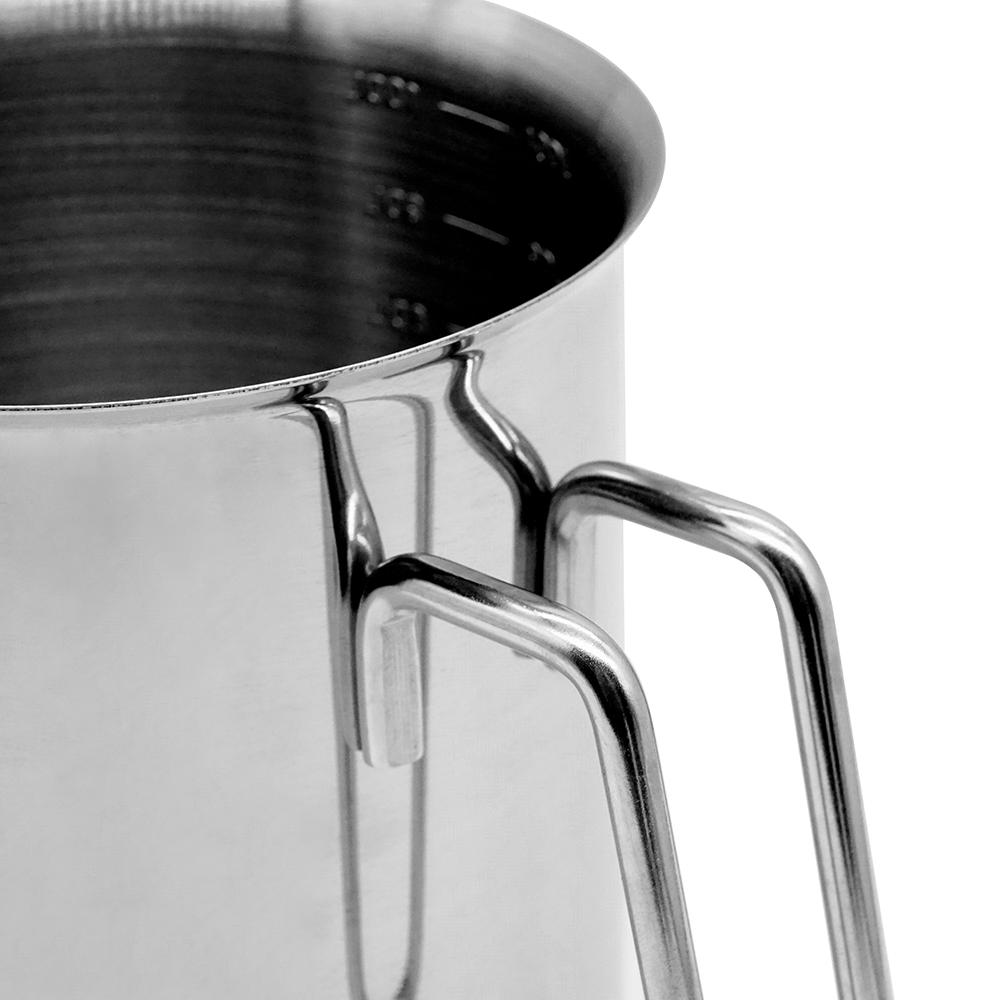
Internal Measurement Markings: Etched or embossed markings help you measure the exact amount of milk, ensuring consistency from drink to drink .
-
Thermometer: Some pitchers come with an integrated thermometer or a built-in rest for a separate thermometer, which is a great tool for learning precise temperature control .
-
Ergonomic & Aesthetic Finishes: From heat-resistant coatings to matte colors and polished finishes, you can choose a pitcher that matches your personal style and provides practical benefits like a better grip .
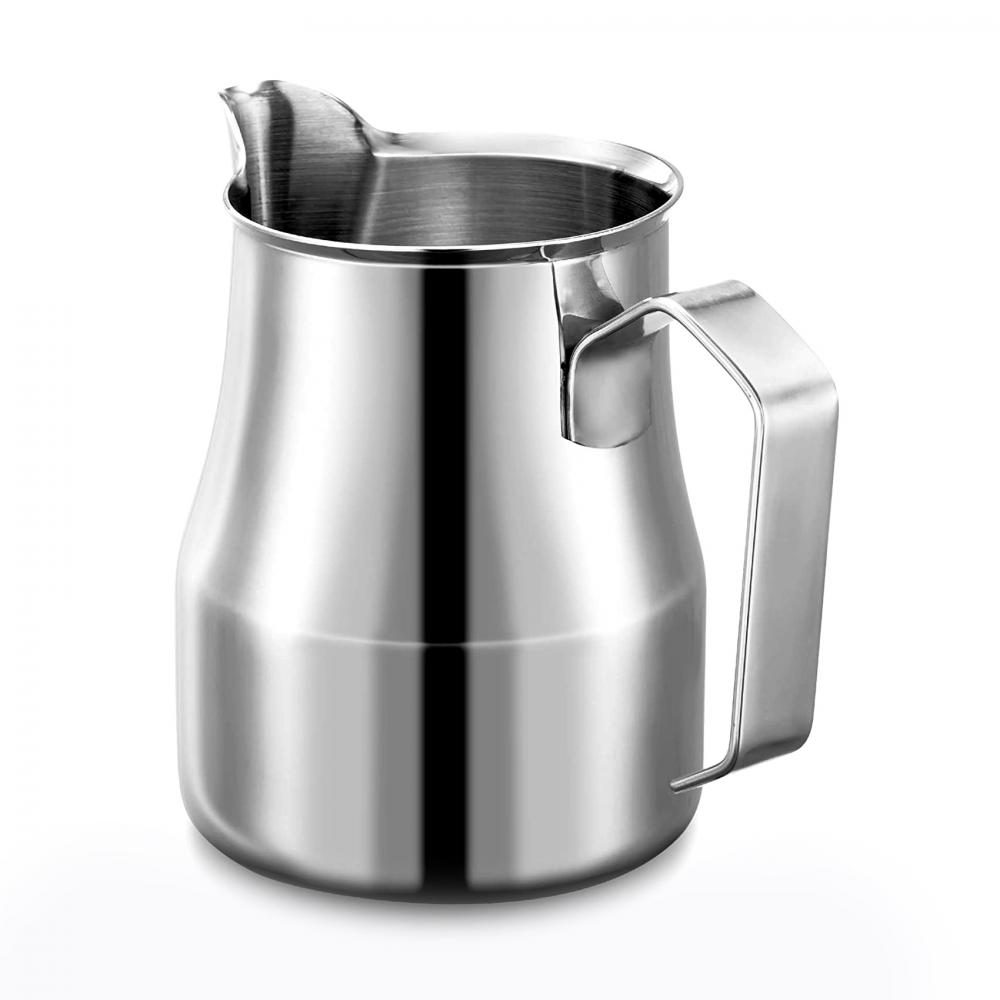
In summary, the best stainless steel milk frothing pitcher for you balances high-quality 304 stainless steel with the right size and spout design for your skill level and beverage needs. By investing in a good pitcher, you are setting the stage for perfectly textured milk and beautiful coffee art.